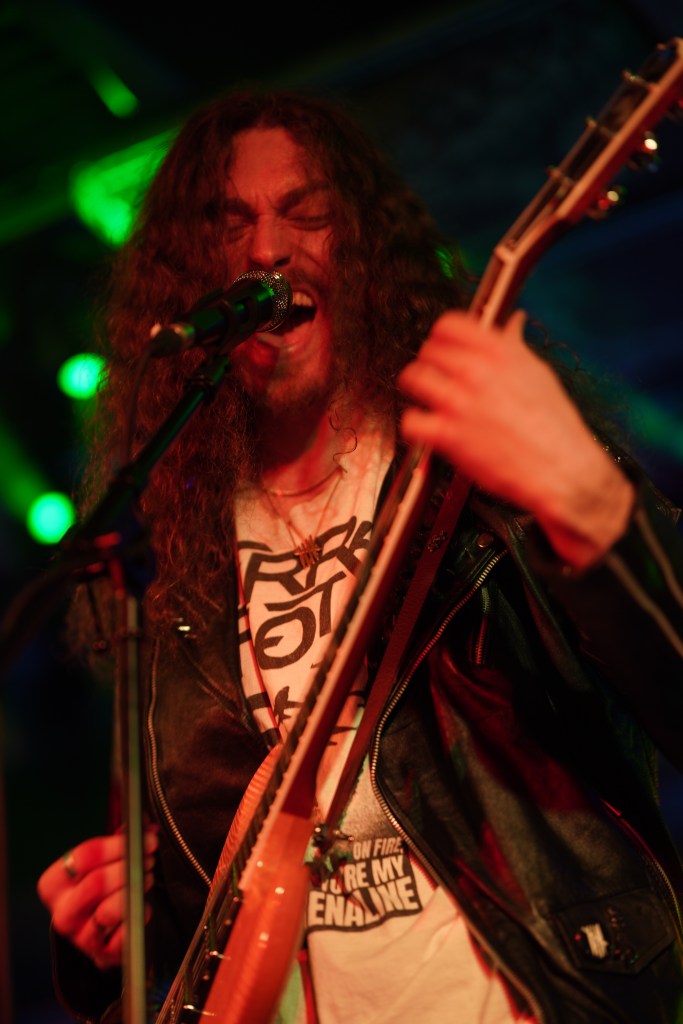
My name is Murray Emery, and I am twenty-five years old and currently a full-time audio engineer. I own a recording studio in Calgary called Crooks Hollow Studio, and I also sing and play guitar in my band Prisoner. I know Pamela through my time as one of her students in FFCA (Foundations For The Future Charter Academy) from 2015-2018. I have also returned to the school for various school activities and have had a fantastic relationship afterwards, which is why I am eager to contribute to “The Road Taken”.
Links:
- Studio Website: https://crookshollow.ca/
- Band Website: https://prisonerband.ca/
Growing up, I always had a fascination with helping people. As a young child, I believed the medical field was for me. I wanted to be a paramedic or an orthopedic surgeon, believe it or not. Those early childhood dreams turned to sports for many years, with my time as a high-level hockey player and martial artist. I had contractual opportunities for sports in the States after high school, as well as teaching opportunities in the Taekwondo community. Music was something that was always there in the background of my life from infancy until today. I grew up listening to rock music with my parents and found the music, culture, and musicians themselves to be captivating in a way that made me want to be like them. I would watch interviews with bands, hear what they had to say about music, the creative lifestyle and how important art is to the world. I ultimately picked up the guitar at fifteen, influenced by my parents and my love for bands like Black Sabbath, Megadeth, and Black Veil Brides. I had a guitar for many years previously, but I always thought it was just cool to have rather than spend the time learning an instrument. I was an athlete after all, and music was only an influence on my aesthetic before 2015. My biggest strengths at that time would have been my time in Taekwondo, as it was crucial in developing my self-discipline and perseverance, as well as growing up working for my parents’ commercial construction company, which taught me maturity, work ethic and how to interact with adults at a cognitive level that developed respect in a business sense from the time I was 13 and beyond. Growing up with that, paired with the critical thinking skills developed in FFCA, I was set up well to pursue the entrepreneurial route in the music world.
My educational journey was relatively unorthodox in many ways. It all started with high school and my obsession with music. Due to my time in commercial construction, I had a different way of viewing teachers and school staff. I built my identity on the concept of respect, which is a core virtue of my ideology and how I view the world. That being said, I remember having conversations with many teachers when I was in high school about life, the education system, myself, their lives, anything and everything. I built relationships with teachers that are still strong even after seven years removed from high school. I was not the most studious person at that time. I did well enough to be a “smart” kid, but I also spent most of my time doing other things with sports, music and work. I found myself to be very straightforward with teachers about my work and how much I truly cared about certain things in school. This created relationships built on honesty, and teachers are in this profession because they love to teach and work to shape the younger generation. They shaped me more than they think because there were so many opinions and ideas I was able to discuss, thanks to my comfort in asking questions and engaging in conversations. FFCA, from my experience, was one of the only schools where a teacher’s door was truly always open and they were willing to be a support system for you in education, life or otherwise. For me, this was one of the main reasons I stayed in FFCA from kindergarten to grade twelve. The leadership course did not click for me until grade twelve. I thought it was a waste of time, but once I realized the interpersonal skills being developed and seeing in real time the different personality types in a group setting, including my own, I saw the true value. There are still things I use from that class with how my band operates, and how I work with people in the music industry.
The next obvious step was how the heck I got from a guy in an FFCA sweater vest to a metal singer and studio owner. We go back to when I picked up that guitar at fifteen. It became my obsession. The reason I knew it was truly an obsession is the fact that I was lucky enough to try so many things in my adolescence from sports to manual labour, art, school subjects, and everything in between. I got to try so many things to see if I liked it or not, so when the guitar stuck, it really stuck. I think that is the biggest advantage I had growing up, because when all my friends were graduating, the vast majority were going to school for what they thought they would like or what society or their parents told them would be best. I remember being one of the only people who had a different plan outside of a four-year degree or directly hitting the workforce.
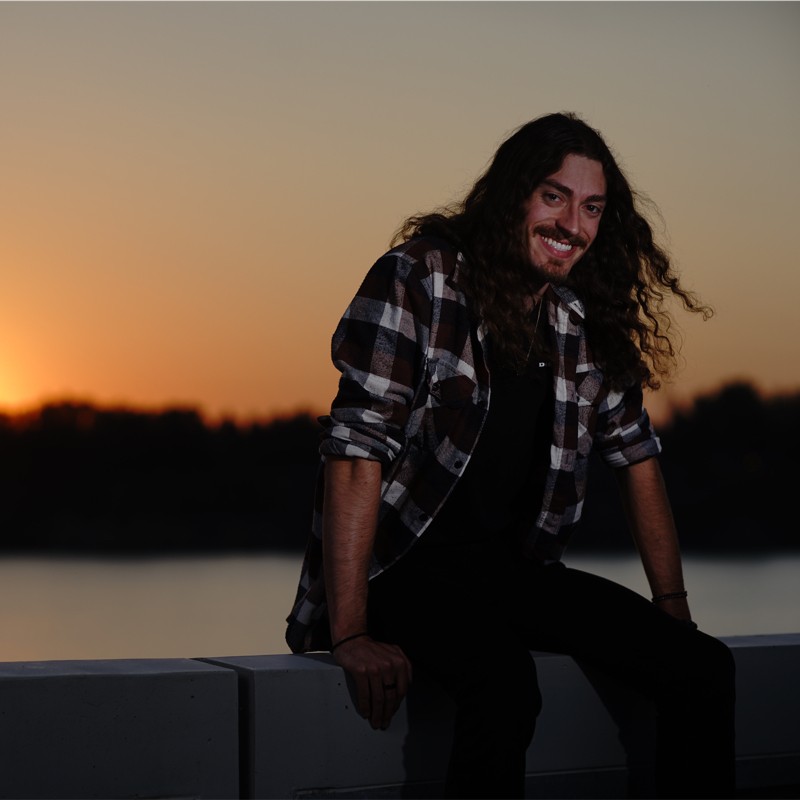
That being said, I knew the story of musicians who moved to Los Angeles with no plan, living out of their cars and making a career out of music. I figured if they can do it, why can’t I? I went to Los Angeles in grade twelve for an opportunity to play a few shows with rock legends like Zakk Wylde, Dave Mustaine and Paul Gilbert. My father saw these performances and realized that it was something I was supposed to do. Upon my return to Canada, we had a conversation about how it is almost impossible to make a career out of just playing guitar. We spoke about my long-term goals of wanting to be a partner, parent, and have a family one day. The priority was to be able to support my family without missing my kids’ lives if I was lucky enough to play guitar for a living. This caused me to think about how I can involve myself in the music industry to make the dream of music a viable career option. Like any industry, knowledge is power. The more you know about a subject, the better equipped you are to make decisions and create an outcome in your favour. I ultimately ended up building my own “four-year degree” for the music industry. The way my industry is set up is based on the need for others. If you specialize in one subject, you need three to five other skillsets to be able to achieve the goal of professional musicianship or studio production. They do this to isolate artists so labels and distribution companies can maintain control of their art and build a monopoly on the industry. My goal was to understand every facet of the music industry on a foundational level so that I could converse with any individual I come across and be able to not only talk to them on a professional or technical level, but also be proficient enough to learn something from everyone around me.
I attended SAIT (Southern Alberta Institute of Technology) from 2019-2020 for a two-year Broadcast System Technology program. This was based on learning how to fix and maintain audio and video equipment in radio and television stations. I did this because you cover everything necessary to work on your own audio gear, from guitar amps to my console, and understand why the equipment behaves the way it does. I learned about low voltage electronics, signal flow, radio towers etc. The broadcast industry is also the highest-stress, fast-paced section of the media industry due to the money in advertising and contracting that follows that. It gave me an understanding of anything and everything electronic, and set me up for the technical side of the industry. From there, I moved to London, Ontario and attended OIART (Ontario Institute of Audio Recording Technology). I wanted to learn the foundation of recording and OIART covers that and then some. It was a three-year program condensed into eleven months, where I was in school six days a week, eight to fourteen hours per day. I learned ProTools (The industry standard digital audio workstation), music production, audio for visual media, computers, acoustics, and live sound. They cover the general and technical information of the live and studio production world. With these two programs, I was able to cover both the technical side and production side of the industry. Having worked in commercial construction for almost a decade at that point, I had a firm grasp on business and how to run a company and interact on a professional level. All of these skill sets, along with my knowledge of playing and writing music as an artist, set me up to be the most well-rounded individual in the industry. I could support my own dream of being in a band for a fraction of the cost and leverage business opportunities with labels and distribution companies for the band. This is due to the fact that I already have connections to everything they would “provide” funding for in their contracts.
I then stayed in Ontario for a year and founded my band Prisoner with friends. I wanted to understand the live show aspect, so I worked deals with wedding venues to allow us to host DIY shows where I would cover all the booking and promotional responsibilities. This showed me how the band works on a business level outside of the production world and how promoters work with artists and venues. I then moved back to Calgary at the end of 2021 to pursue music. I ended up moving to Los Angeles for a few years after returning to Calgary. I wanted to understand why that was a hub for so many forms of art, from music to visual media. I lived out of my truck and on friends’ couches or bean bag chairs for those two years. Not being a US citizen and without a green card, I would work construction in Calgary for two months straight, save all my money, then drive to LA and stay for roughly six months til I would run out of money. I repeated this process until I solidified my place in the LA music scene as an engineer and musician. I got to know musicians who attended Musicians Institute and developed as a guitarist and vocalist with them. I played shows around the LA scene and worked on friends’ music. The business side of the industry was extremely difficult to be a part of down there, and at one point, I wanted to open my recording studio in LA. I thought better of it because of how oversaturated the state is with music in general. I took my education and practical knowledge of the industry back to Calgary at the end of 2023, where I designed and built Crooks Hollow Studio. Most people would see leaving LA as a failure, but I viewed it as a chapter of importance and being young and free to explore the world. Not many people get the opportunity to just live on Hollywood Boulevard with their friends, and do the rock music thing where you play guitar all day, go to shows at night and save money because you only ate once a day. All of this knowledge was pertinent to my development of Crooks Hollow in Calgary because I was setting up in a new, unsaturated market that is quickly growing.
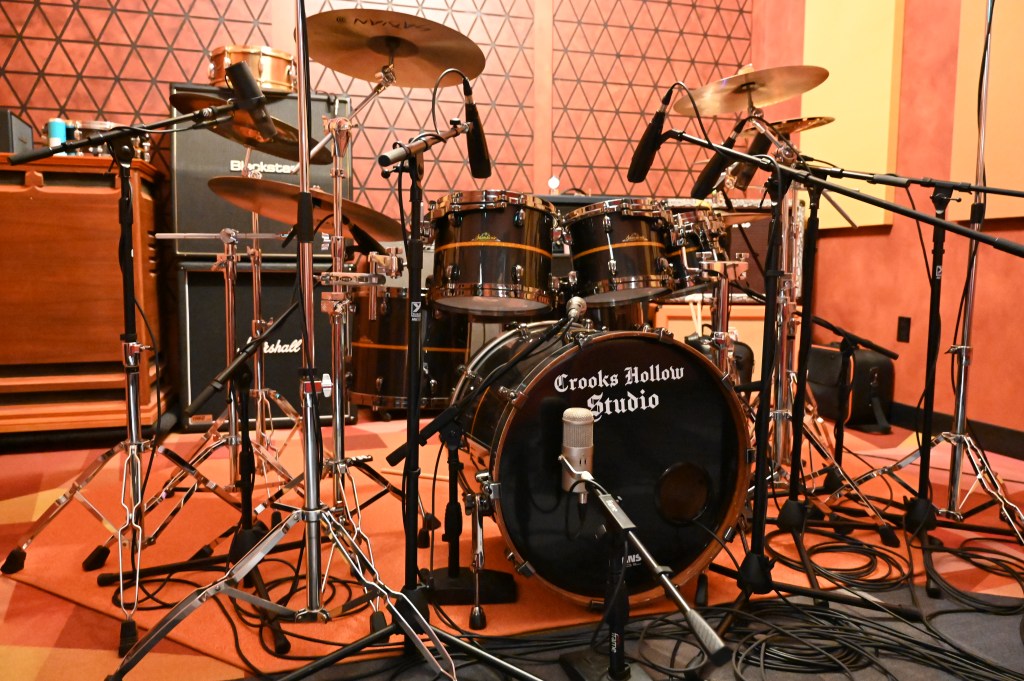
With the design and build of my studio, it solidified my place in the Calgary music scene. I based my business on truth: A studio by musicians for musicians. I am in pursuit of the same end goal as every single person who comes into my space. I can relate to them on a base level, and I express that I genuinely care about their art because I am lucky enough to be trusted in bringing their ideas to reality in a permanent way. I connect with people because CHS (Crooks Hollow Studio) is not just a place to record music, it is a one-stop shop for the industry and community because I have contacts for everything from photographers, videographers, merchandise, and physical mediums for vinyl and CD production, among other things. I have a community of people in the business world who have a source of income due to the people working with them through my studio. This connects me to all of these people to work with Prisoner as well. This is all-encompassing because remember when I mentioned how the labels and distribution companies have monopolized the music industry? All of this gives me the leverage to work with these companies on a different level than everyone else. I have the ability to deliver a label-quality product that they are interested in promoting. They have no overhead to work with us, and we keep them accountable. If they want to work with us, the only reason we would fail would be because of their lack of promotion and networking, because in their eyes, our product is good enough to invest in.
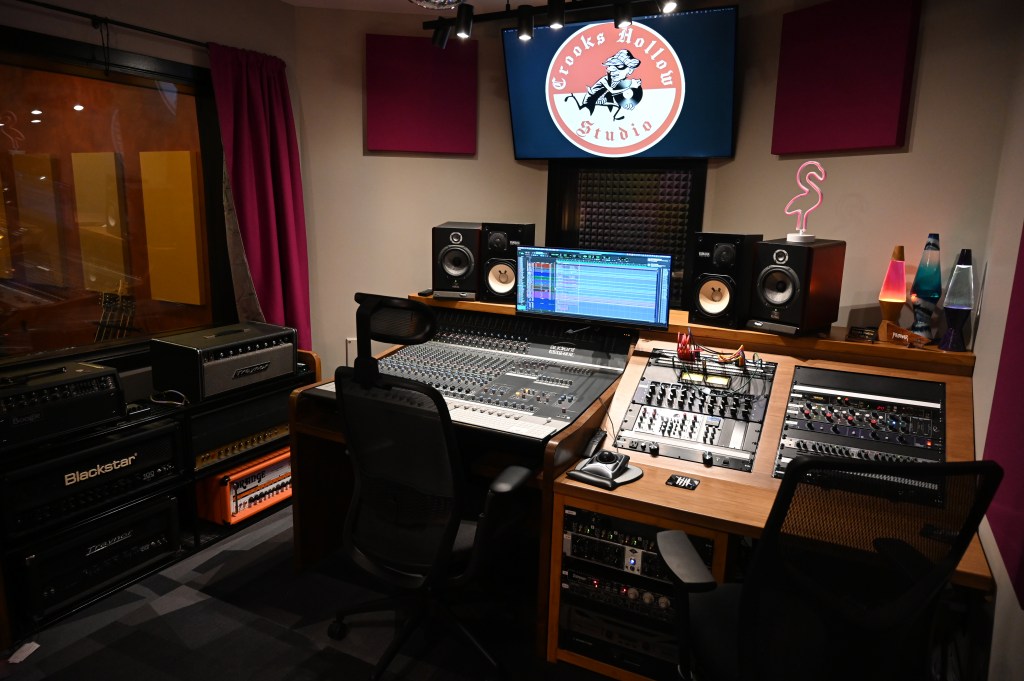
In a way, I have two businesses, the studio and the band. Both overlap in various ways as Prisoner is now a national touring band with the release of our sophomore record, and our product is not only our music, but our merchandise, social media presence and everything you would need to build a brand. Combine that with the studio, and you have a way to work in the industry full-time. My band mates are now transitioning to be full-time session musicians in my studio, runners and other jobs in the industry. This follows my business model where plan A meets plan B with the band and studio where my community of people can make a living off of my business, with me, so that we can have the freedom to pursue our dreams uninhibited.
This current chapter is a great one because I am in the momentum stage of being a staple in the western Canadian music scene, and Prisoner is growing outside of the local band level. We are on the cusp of being a band full-time, and it is exactly how I envisioned it. I am working with so many amazing people, and I am truly happy to have such a great group of people around me doing what we love. We are successful because we care enough to push each other to our fullest potential. You cannot do things alone, and if everyone is on the same page, you can do great things.
I learned a vast amount about people and life as I grew and changed from eighteen to twenty-five. The biggest lesson was trusting your gut instinct. That is your intuition telling you if something is good or bad. I also learned that the bottom line is to be a good human being first: Be empathetic, compassionate, and care about your work, family, and friends. If your core values are to be a good person and do good in the world, for yourself and your community, you will build a life of strength. It will allow you to work hard and stay motivated to want more for yourself and the people around you. I know it sounds like you have heard those ideas before, but I truly think that is why I am successful.
For anyone looking to get into the music industry, research the various opportunities in the business, technical and production sectors. Find something that works for you and that you enjoy. If you’re a musician, go to local shows, support the bands and your local scene. I consistently do that, and you do not need a recording studio to be a part of the scene and build yourself opportunities to play and build a fan base. If you show up for people, they will show up for you. Look for volunteer opportunities with promoters and venues as a door person. Email studios to look for an internship to learn about the production side. Put yourself in the position to have opportunity. As technology-reliant as the music industry is, it is still very much based on word of mouth and personal connection. If you are interested in music production, I would highly recommend attending OIART. It is the only audio school that is fully immersive in how I described, and truly prepares you for the industry. It has been around for over forty years and constantly updates its programs with the changing times. Most of my friends who graduated with me are full-time in the industry. My advice to anyone just starting would be to just be a sponge, be willing to learn, and ask questions. In such a creative industry, there is always more than one right way of doing things. This means leaving your ego at the door and just being someone fun to be around so that you can learn from people. As you develop, take that information and set yourself up to be able to provide value to others so that you can build meaningful connections in the long term. For generalized advice to high school students: Do what I did, and try new things. See what you like and don’t like. Work different jobs, try different sports, creative avenues and anything in between. You never know what will fit and work for you. Worst case scenario, you know what you don’t like, and you can gravitate towards things you are passionate about.
For my future, the band is starting to make lots of progress and traction, as is the studio. My goal is to continue to outfit “Studio A” with top-level equipment and eventually expand the studio to have a “B” and “C” room to build the business to a passive income level where I still work in the studio full time when the band is not touring. My dream and goal have not changed since I was eighteen, the context and specificity have become more focused, but I am now blessed to get to do it with six to ten people who are fully invested in these ideas I’ve spoken about as their own. I still want to be a musician, and I still want to have a family one day, but I am realistically close to these goals and have achieved many of them. I have set myself up for success, and I am truly happy because I can share it with the ones I love.
If anyone reading this is interested in learning more about the music industry or has questions, please don’t hesitate to reach out. Please feel free to email me at Crookshollowstudio@gmail.com.
Thank you, Ms.Hunnisett, for the opportunity to share my story and journey in life.


 The Road Taken: Career Journeys
Leave a comment