Megan Wilson

Megan recently completed law school at the University of Calgary. At the time of writing, she is an articling student at the Calgary office of a national law firm. In addition to her Juris Doctor, she also holds a Bachelor of Arts (English Honours, First Class) and a Bachelor of Education. Megan has many passions throughout her life, including writing, the environment, and travelling, and she expects to grow to discover more as time goes on.
In Sylvia Plath’s The Bell Jar, the protagonist Esther Greenwood visualizes the many possibilities for her future as a fig tree. Plath describes Esther’s concurrent ability to dream and inability to actualize those dreams as follows:
“I saw my life branching out before me like the green fig tree in the story. From the tip of every branch, like a fat purple fig, a wonderful future beckoned and winked. One fig was a husband and a happy home and children, and another fig was a famous poet and another fig was a brilliant professor, and another fig was Ee Gee, the amazing editor, and another fig was Europe and Africa and South America, and another fig was Constantin and Socrates and Attila and a pack of other lovers with queer names and offbeat professions, and another fig was an Olympic lady crew champion, and beyond and above these figs were many more figs I couldn’t quite make out. I saw myself sitting in the crotch of this fig tree, starving to death, just because I couldn’t make up my mind which of the figs I would choose. I wanted each and every one of them, but choosing one meant losing all the rest, and, as I sat there, unable to decide, the figs began to wrinkle and go black, and, one by one, they plopped to the ground at my feet.”
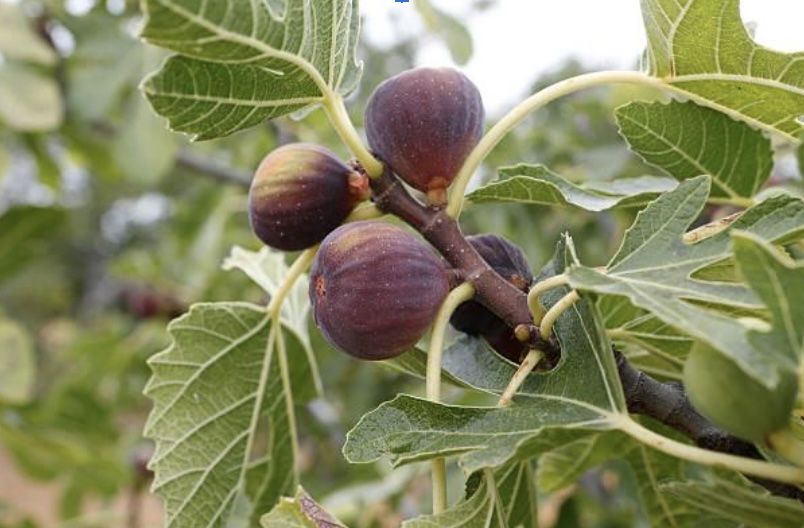
Plath’s fig tree metaphor is the best way to describe how I felt leaving the comfort and structure of school. I had always loved school and done well academically. As graduation inched closer, all the adults around me kept repeating the same thing to me: that I had set myself up for success and could do anything I wanted. I had so much choice, all I had to do was make a decision. There were figs aplenty on my tree. This was a glorious and terrible thing.
One of my earliest memories is my parents asking me what I wanted to be when I grew up. In my mind’s eye, my father asks the question as he weaves our car through the mountain pass on the way to a family vacation in British Columbia. My mother turns around in her seat to watch me as I proudly announce that I am going to be a doctor and a veterinarian and an astronaut. She and my dad share a knowing smile before he laughs dryly and tells me that will be a lot of school. Although not explicitly stated, this is my first introduction to the idea that growing up means making choices and choices inherently mean some things are left unchosen. It is simply impossible to harvest all of the figs on the tree. Much like Esther Greenwood, I have been burdened by both the possibility of choice and the secret fear of choosing wrong.
Accordingly, I spent a great deal of time considering my options. Veterinarian, one of the possibilities I proclaimed from my car seat, remained a dominant vision for my future throughout elementary school. This shifted in middle school and high school, where I wanted to write novels, or maybe even practice psychology. Or, what if I was an English teacher and I dabbled in creative writing on the side? Ultimately, I had concluded that the best way to avoid analysis paralysis was to just make a choice and just stick with it. So, I settled on pursuing a Bachelor of Arts with a Major in English and a Bachelor of Education through the concurrent program at the University of Calgary. To be clear, I wasn’t unhappy in this decision. Although I’d applied for and been accepted into multiple programs, I knew logically that I simply could not do it all. I also wanted to be free from the weight of choice and possibility. I chose that path for many reasons: it was professional degree with job security, it would allow me my summers off to pursue fledgling dreams of writing a book or to travel, and it seemed like the choice to best set my future in stone. Once my choice was made, all I needed to do was focus on achieving my goal.
And I did. Much like high school, I had a strong academic performance in university and I enjoyed my classes. I completed an undergraduate honours thesis in English and volunteered on a weekly basis in schools and libraries in my community throughout my degree. Moreover, teaching did appear to me to offer everything I thought it would. I enjoyed the idea of working with people, particularly children; I took pride in my involvement in these endeavours, and for a while I would say that I was satisfied with the decisions I’d made for myself. This, however, did not stop my pesky habit of dreaming up possibilities. I was fortunate enough to have some incredible experiences in undergrad, and each one inherently draw my eyes upwards towards the treetops.
At the end of my second year of undergrad, I gave in to the itch of my travel bug and participated in a spring semester group study program in Greece. Here, I fell in love with Greek and Roman studies. What if I worked in a museum in Europe and curated exhibits of ancient artifacts? The next spring, I was fortune enough to travel to Italy for a spring semester studying Italian language and culture. What if I got a PhD and was an academic whose field of expertise was the Italian Renaissance?
My academic pursuits also left me with budding thoughts. As a part of my English degree I wrote an honours thesis. During this process, I realized how much I loved persuasive and analytical writing, perhaps even more than I loved writing poetry or fiction. What if I was meant not to be a teacher, but a professor? Should I pursue a PhD in English.
These futures scared me. I once again found myself feeling crushed under the weight of possibility. Worse, the fact I was once again burdened by this must have meant that my previous decision was wrong. Still, the figs beckoned. Each time, I could see a future so vivid I could taste the seeds bursting on my tongue.
To be clear, I wasn’t unhappy with my English and Education degree. However, I had reached a point where I just wasn’t fully certain that it was what I wanted to do with the rest of my life. I felt less certain of my future than any version of me that had come before. I wanted was a sign, a lightning strike or flashing neon, to tell me what to do.
Instead, there was a global pandemic that sent the world into lockdown, which coincided with the last two years of my undergrad. For me, lockdown was miserable. With little to do outside of my course work, I was forced into self-reflection, which left me doubting every choice I ever made and every future I’d left untouched. Despite being on a course to graduate with two degrees as a deans list student, all I could see around me was rotting fruit. It was in this moment of doubt, in the spring of 2021, that I made a decision to pivot from the plans I’d made for my life at 17.
The dream wasn’t even a dream to start with; it was a question raised by my mother. Had I ever considered challenging the LSAT? Her question gave me pause. Being a lawyer actually wasn’t a prominent feature among my possible futures. I had never really been a fan of shows like Suits or other court room dramas. Still, it gave me pause, particularly when she said that she’d read that a lot of people my age were taking the pandemic as an opportunity to challenge exams like the LSAT and MCAT. With my squeamishness for needles and blood, medicine was off the table. But as she spoke, law had a deep purple skin that glistened in the sun, and I felt brave enough to reach for it.
I can’t really tell you what made me pick law school from the branches when I’d left some many other dreams to drift from my tree. Maybe it was the logical argument that this was the perfect time for me to try my hand at challenging the LSAT. Maybe it was the feeling in my gut that this future could be right for me if I gave it the chance. Maybe I had come to the realization that changing my mind didn’t mean I’d failed, it meant that I had grown.
So in the summer of 2021 I studied for the LSAT, challenging it in August and achieving a score competitive enough to apply for law school. Emboldened, I made the choice to apply for law school as I entered my final year of undergrad, just to see what would happen. As acceptance letters from all over Canada came back in the winter of 2022, I chose the University of Calgary Faculty of Law to stay close to family and friends. If law turned out to be a terrible choice, it would be good to have them to fall back on. In climbing upwards, I felt the burden of fear fall from me. I was going to give law school a try, and if it was terrible then I would choose something else for myself.
Law school, it turns out, wasn’t terrible. It was one of the most challenging things I’ve ever done, but it was also deeply engaging and rewarding. I enjoyed the majority of my classes, quickly realizing the law offered me an avenue towards persuasive writing that I hadn’t previously considered. I secured a job first as a legal summer student and then as an articling student at a national law firm. I have also been fortunate enough to have unwavering support and encouragement from my friends, my family, and the man who is now my fiancé.
Now, you may be thinking that I’m at a point where everything feels so right in my life that I am clearly cemented in my path. You would be wrong. I think that, for now, continuing to pursue law is what is right for me. This does not mean that my future could hold something different. Maybe I will find my way back to teaching or maybe I’ll go back to school for something completely different. I am empowered by the notion that I can always change again if I want to.
If I can offer you any advice, it is this: you don’t need to know everything about yourself or who you want to be at 17. And what you do know about yourself at 17 might change when you are 27 and when you’re 47 or even when you’re 87. The idea that people only have one career for their entire life is outdated. One of the most exciting parts of being alive is that you have the autonomy to make the decisions that change your life at any given moment. I am by no means suggesting that you throw caution to the wind or that the choices you make at 17 don’t matter. Rather, I am saying that as much as there are big decisions to be made now, you will always have the power to make equally impactful decisions about your life as you grow. So try what interests you and take comfort in the knowledge if its not what you’re meant to do or where you’re meant to be that you will inevitably find your way. You may not be able to harvest all of the figs at once, but there will always be more figs for you. The ripening of fruit is an ancient, cyclical process that will not fail you.


 The Road Taken: Career Journeys
Leave a comment